
Walking-Assist Robot WIM S: Ottobock to Sell in US as Wellness Device, No Price Announced
2026.11.18조회수 8
Single hip motor assists both legs with 6 Nm torque; medical version WIM Medi awaits regulatory authorization
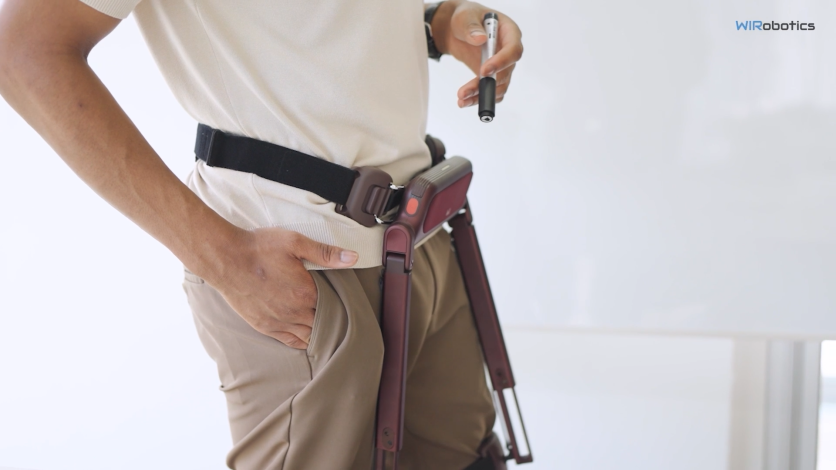
WIRobotics said Monday that Ottobock will distribute its WIM S wearable walking-assist robot across North America, with US sales beginning first. A try-on at an Ottobock orthotics and prosthetics (O&P) clinic will not amount to a clinical endorsement: the maker's US unit calls WIM S a wellness device with no FDA clearance and no medical claims, according to Securities.io's write-up.
The agreement between WIRobotics USA Inc. and Otto Bock HealthCare LP was signed on Oct. 15, according to the release, which does not state the year. The release names no US price and no start date, and it does not say whether Ottobock's rights are exclusive.
Clinic Try-On at Ottobock O&P Sites Is Not Clinical Endorsement of WIM S
US buyers will be able to purchase WIM S through Ottobock's direct-to-consumer platform and the WIRobotics USA store, and to try it at select O&P clinics, according to the release. The release does not name the clinics. WIRobotics' US website says free in-person demos are coming to cities across the country but lists no locations, dates or fees, and it does not mention Ottobock.
O&P clinics are medical settings, which is why a wellness product demonstrated there can read as medically endorsed when it is not. The company's own US site describes WIM S as "a wellness activity device, not a medical device," and says it makes no medical claims and holds no FDA clearance.
The medical version, WIM Medi, is held back. The release says it requires regulatory authorization and a separate agreement before Ottobock can handle it. Canada is not yet committed: the release says the companies will consider it based on customer feedback. Scott Schneider, Ottobock's head of government and medical affairs and future development, is the executive quoted in the release.
How Does One Hip Motor Assist Both Legs?
WIM S is a belt-worn robot with one motor at the front of the waist, described by the Exoskeleton Report as a single-motor wearable robot that drives both legs. In the peer-reviewed paper on the technology, a single actuator drives the hip in the sagittal plane for flexion and extension, which in practice pushes one leg forward as it pulls the other back.
The control method is adaptive delayed output feedback control, which reads gait timing from a single rotational sensor rather than a bank of sensors on each leg. That single-actuator design keeps the device light, and it also couples the two legs: assistance to one side is tied to the opposite side.
The Japanese distributor lists a 1.1 kg (2.4 lbs) main unit and 1.6 kg (3.5 lbs) total weight, with 6 Nm (4.4 lb-ft) of maximum torque. Care mode is aimed at slower walkers, and Japanese trade coverage describes a limit of about 2.5 km/h (1.6 mph) or a 38 cm (15 in) stride.
A Japanese hands-on review described a healthy adult man testing the device at home for about 10 minutes in Air mode after a five-minute beginner program. The reviewer noted that the belt must fit snugly or the unit sways, and that WIM S is not a medical device and is meant for people who can already walk independently.
Company-Authored Studies Supply Most Evidence for WIM S Benefits
The main peer-reviewed paper on the technology appeared in Scientific Reports in March 2025. In a four-week program with nine elderly participants, walking speed rose 14.8% in a 10-meter (33 ft) walk and 10.6% in a six-minute walk. Timed Up and Go improved 24.5% and Short Physical Performance Battery scores improved 18.7%.
Metabolic cost fell by 13.6%, plus or minus 3.2%, but that figure came from only three young adults. Authors include WIRobotics co-CEOs Yong-Jae Kim and Younbaek Lee, and most authors are affiliated with WIRobotics' R&D team, so the work is company-authored. The paper reports no conflicts of interest, and it describes the original WIM system rather than confirming results specific to WIM S. No independent trial of WIM S was found.
Is WIM S FDA Approved? Wellness Label Versus Prescription Exoskeletons
WIM S is not FDA cleared, according to Securities.io, which relied on the release and company statements and did not independently verify them. The FDA's general wellness policy, updated January 2026, covers low-risk products that promote a healthy lifestyle. Which side of that line a product lands on depends on what its maker claims, not on its hardware.
Powered exoskeletons that make medical claims are regulated differently. They are Class II prescription devices under 21 CFR 890.3480, product code PHL. One cleared example is Honda's Walking Assist Device, cleared in December 2018 for stroke patients with gait deficits in rehabilitation institutes under the supervision of a trained healthcare professional.
The line carries insurance consequences. A CMS final rule effective Jan. 1, 2024 classifies powered exoskeletons as braces when they support weak arms or legs. Nothing in the WIM S release suggests insurance coverage, and a wellness-labeled purchase makes no medical claims.
An earlier WIRobotics release for the original WIM, issued in January 2025, listed seniors and injury-recovery patients among intended users. Readers should check current marketing claims against the wellness label.
Japan and Korea Prices Are Only Reference Points Before US Price Appears
No US price has been announced. In Japan, WIM S sells for ¥396,000 including tax (approximately $2,482), through a distributor that began sales in January 2026. A monthly subscription costs ¥28,600 (approximately $179), according to the Japanese review.
Consumer hip exoskeletons already sell in the US at known prices. Hypershell's X series ranges from $999 for the X Pro S to $1,999 for the X Ultra S, and the company targets walking, hiking and outdoor terrain. A shopper comparing them with WIM S will need the US price, the return policy and the trial terms. WIRobotics' 2025 US release described gait metrics in the companion app, so buyers can also ask what gait data it stores.
Ottobock Already Sells Powered Exoskeleton Through SUITX Brand
Ottobock completed a stock market listing in October 2025. The release describes the company as operating in 45 countries with nearly 9,300 employees, more than 430 clinics and over 2,600 patents and applications.
Ottobock announced the suitX acquisition in November 2021 and sells exoskeletons under the SUITX by Ottobock brand. That line is no longer only passive. Ottobock announced series production of the battery-operated IX BACK VOLTON back exoskeleton on Nov. 4, 2025. It weighs 4.8 kg (10.6 lbs) and relieves up to 17 kg (37 lbs) per lift, according to Ottobock. WIM S is a different kind of product, aimed at walking rather than lifting.
WIRobotics was founded by former Samsung robotics engineers. The release says WIM has passed 4,000 cumulative units sold, with South Korea as its home market and sales that include Europe, China and Japan. In May 2026, the company announced a 95 billion won Series B (approximately $71.1 million), led by JB Investment, tied to expansion of its humanoid robot business.
Questions to Ask Before Buying WIM S in the US
The purchase decision for now turns on facts the release does not provide: the price, the start date, the list of clinics, whether any try-on fee applies, and how the return policy works. Independent data specific to WIM S is also missing, and the clearest evidence on its benefits comes from small studies by people who work at the company. A walking-assist robot that eases effort for some healthy walkers is a different claim from a treatment for a mobility condition, and WIM S is being sold for the first.
Exchange rate as of Nov. 16, 2026; conversions are approximate.
Frequently Asked Questions
Is the WIM S FDA approved?
WIM S is not FDA cleared, according to Securities.io, which reported that the maker's US unit classifies it as a wellness device with no medical claims. WIRobotics' release says the medical version, WIM Medi, requires regulatory authorization.
Does trying WIM S at an Ottobock clinic mean it is medically endorsed?
No. The release says try-ons will happen at select O&P clinics, but the product is sold as a wellness device, and a clinic setting can make that label easy to miss. Ask the clinic what the fitting covers and whether it involves any assessment of your gait or condition.
How does a hip walking-assist robot like WIM S work?
A motor at the waist applies torque to each thigh through straps, pushing one leg forward as it pulls the other back, with timing read from a single rotational sensor, according to the peer-reviewed Scientific Reports paper. Maximum torque is 6 Nm (4.4 lb-ft), according to the Japanese distributor.
How much does WIM S cost in the US?
No US price has been announced. In Japan it sells for ¥396,000 (approximately $2,482) through a distributor that began sales in January 2026.
출처: Tech Times
https://www.techtimes.com/articles/330843/20261116/walking-assist-robot-wim-s-ottobock-sell-us-wellness-device-no-price-announced.htm#google_vignette